
AI Content Marketing Certification in 2026: What the New Credentials Signal for Marketers
AI content marketing certification is having a moment, and 2026 is the tipping point
The market for ai content marketing certification is not just growing, it is getting more structured, more formal, and frankly more competitive. In October 2026, the American Marketing Association endorsed learning path, Generative AI for Marketing Professional Certificate, is updated, adding new required courses for learners still in progress. At the same time, Harvard Extension School positions its AI in Marketing Microcertificate (Online) as a graduate credit bearing credential with a defined completion policy for the 2026 to 2027 academic year. And Coursera’s Digital Content Pro: Writing, Strategy & AI Specialization is refreshed in July 2026, leaning hard into responsible generative AI use, SEO, analytics, and portfolio style applied projects.
Put those developments together and a clear story emerges. The industry is moving away from casual, ad hoc AI upskilling and towards credentials that look and behave like professional qualifications. Not everyone needs a university microcertificate, fair enough. But employers increasingly want evidence that a marketer can use AI tools without wrecking brand voice, breaching privacy expectations, or producing content that looks plausible but is wrong. And that is exactly what these programmes are trying to package and assess.
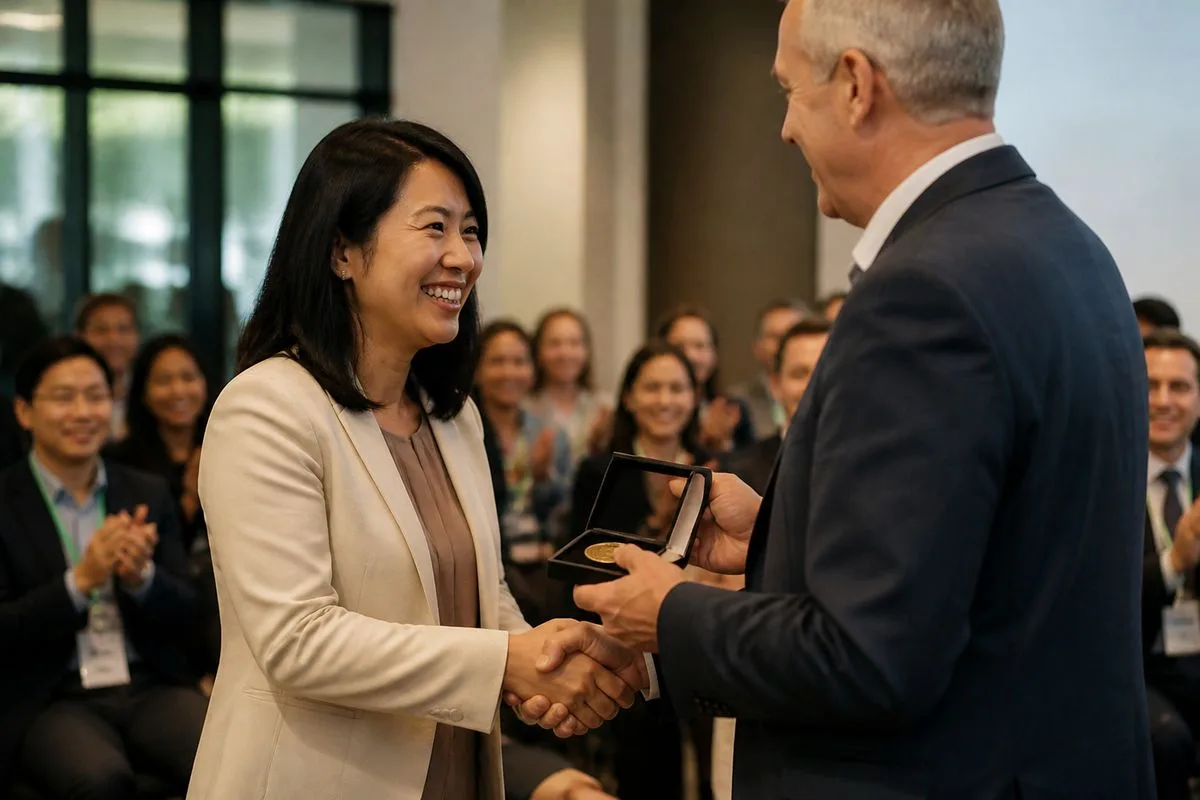
This matters because content marketing is now one of the most visible, most measurable parts of modern marketing. It is also one of the easiest areas to automate badly. A certification is becoming a shorthand for competence, judgement, and process, not just tool familiarity. And in 2026, the credential landscape is starting to separate into distinct tiers, each with different trade offs in time, cost, and credibility.
The 2026 news: three credential moves that reshape ai content marketing certification
The most concrete “news” event in the source material is the update to the AMA endorsed Generative AI for Marketing Professional Certificate. The learning path is explicitly noted as updated on 2 October 2026. The update does not affect certificates already completed, but it does affect learners who are mid stream. They may now be required to complete AI Basics: What Every Professional Needs to Know and Prompt Engineering: How to Talk to the AIs. That is a subtle but important shift: it signals that foundational AI literacy and prompt craft are no longer optional extras. They are becoming table stakes.
At Harvard Extension School, the AI in Marketing Microcertificate (Online) is framed as a two course, graduate credit credential with a long runway: flexible pace, 8 months to 2 years. It also carries a clear price point, $7,160 tuition, and a defined start window for the next intake cycle. Registration for the spring 2027 term is open 5 November 2026 to 7 January 2027. And there is a policy change worth noticing: starting in the 2026 to 2027 academic year, microcertificates must be completed within two years, with specific rules about which academic year courses can count. That is not marketing fluff. It is governance, and governance is what makes credentials “real” in the eyes of institutions and employers.
Then there is Coursera’s Digital Content Pro: Writing, Strategy & AI Specialization, a six course series that is recently updated in July 2026. It positions itself as intermediate level, with a suggested four week completion timeline at 10 hours a week, and it offers a shareable certificate. It also carries a visible quality signal: 4.5 rating from 6,618 reviews for courses in the programme. The detail that stands out is the applied learning emphasis. Learners evaluate AI generated content, build content audits and competitive analysis, develop SEO and influencer plans, analyse sentiment and platform performance, and finish with an AI powered content calendar for a Gen Z focused brand. In other words, it is trying to prove capability through outputs, not just quizzes.
Background: who is behind these programmes, and what they are actually teaching
The AMA endorsed certificate is presented as a six course learning path with 4 hours of content, culminating in a final exam and certificate. The course list is a snapshot of where the profession thinks the skills are. It starts with fundamentals, then moves quickly into practical execution and governance. The stated outcomes include analysing key generative AI concepts for content creation, identifying ethical practices for responsible AI in marketing, creating authentic content while maintaining voice, and planning strategies to integrate AI into marketing workflows. That combination is telling. It is not “how to use a chatbot”. It is “how to use AI inside a marketing operating model”.

Some of the instructors named in the AMA path also signal the blend of practitioner and educator credibility. Laurence Moroney, described as Director of AI at Arm, teaches AI Basics: What Every Professional Needs to Know, released 11 May 2026, and the course shows 53,917 viewers in the source material. Xavier Amatriain, Chief AI and Data Officer at Expedia Group, teaches Prompt Engineering: How to Talk to the AIs, released 11 August 2026, with 14,681 viewers. Other courses focus on responsible AI in content marketing, writing that “doesn’t sound fake”, and building a generative AI plan for marketing success. The message is consistent: competence is a mix of technique, ethics, and planning.
Harvard Extension School’s microcertificate takes a different route. It is not a short learning path, it is a structured academic credential. It requires two courses: MGMT 6620 Digital Marketing in the Age of AI, available Fall 2026, and MGMT 6750 Marketing Analytics: Fundamental Data Driven Marketing, available Spring 2027. The outcomes include using AI to refine content, design visuals, and automate campaigns, plus using internal and external data to understand trends and behaviours. It leans heavily into analytics and decision making, which makes sense for a graduate credit offering. And it sets a clear performance bar: learners must earn at least a B grade in each course to earn the microcertificate.
Coursera’s Specialization sits somewhere in the middle. It is not a university microcertificate, but it is more comprehensive than a short certificate path. It explicitly blends content strategy, SEO, social media, influencer marketing, and analytics with responsible generative AI use. The skills list includes copywriting, content scheduling, large language modelling, campaign management, content performance analysis, and search engine optimisation. The programme also names tools learners will use, including generative AI and ChatGPT. That matters because employers often ask a blunt question: “Can this person actually work with the tools we use?” Coursera is answering that directly, while also trying to keep the focus on outcomes and portfolio work.
Why this shift is happening now: from tool hype to professional standards
In 2023 and 2024, many marketers treat generative AI as a productivity hack. Useful, sometimes brilliant, occasionally chaotic. But by 2026, the conversation changes. The AMA update that adds AI basics and prompt engineering as potentially required courses is a sign that the industry is tired of shallow competence. Prompting is not magic, it is a discipline. And basic AI literacy is not optional when AI outputs can influence brand claims, compliance risk, and customer trust.
There is also a quiet acknowledgement in these curricula that content marketing is now inseparable from data. Harvard’s microcertificate explicitly centres analytics and predictive thinking, and it frames AI as a way to unlock deeper customer insights, optimise campaigns, personalise experiences, and streamline operations. Coursera’s applied projects include sentiment analysis and platform performance comparisons. Even the AMA path, despite being only four hours of content, includes building an AI implementation plan. That is the direction of travel: content is not just creative, it is operational, measurable, and increasingly automated.
Another driver is governance. Harvard’s two year completion rule for the 2026 to 2027 academic year is a small detail with big implications. It reflects a belief that AI related skills age quickly. A credential earned too slowly risks being out of date before it is completed. Coursera’s “recently updated July 2026” label plays into the same expectation. And the AMA explicitly flags its October 2026 update, clarifying what changes and what does not for learners. In a fast moving field, “staying current” becomes part of the product.
And then there is the reputational risk. One of the AMA courses is literally titled Writing Great Content with Gen AI That Doesn’t Sound Fake. That is not exactly groundbreaking as a concept, but it is brutally honest about the problem. AI can produce fluent nonsense, generic copy, or content that feels off brand. Certifications are increasingly selling judgement: how to maintain voice, how to check accuracy, how to avoid ethical pitfalls, and how to integrate AI without turning the brand into beige sludge.

How to compare an ai content marketing certification: credibility, cost, and career signal
Not all credentials are trying to do the same job, so comparisons need to be practical. The AMA endorsed certificate is short, structured, and exam based. It is positioned as a professional learning path, with six courses and four hours of content. It is likely to appeal to marketers who need a fast, recognisable credential and a clear framework for responsible use, prompting, and workflow planning. The inclusion of named instructors with senior industry roles also strengthens the credibility signal, particularly for employers who value practitioner led teaching.
Harvard Extension School’s microcertificate is a heavier lift. It is two courses, taken for graduate credit, completed over 8 months to 2 years, with a tuition figure of $7,160. It also requires at least a B grade in each course. That is a very different proposition. It signals academic rigour, assessment standards, and a stronger link to analytics and strategic decision making. It also offers a stacking pathway into a four course graduate certificate in Marketing Management and Digital Strategy. For some professionals, that stackability is the point. It turns a short credential into a longer term education plan.
Coursera’s Specialization is positioned as intermediate, portfolio oriented, and broader across the content marketing toolkit. It is six courses, with a suggested four week timeline at 10 hours a week, and it is included with Coursera Plus. It also has a visible social proof metric, a 4.5 rating from 6,618 reviews. For hiring managers, the strongest signal here may be the applied projects: audits, SEO plans, analytics workshops, and a content calendar. In content marketing, outputs matter. A certificate plus a portfolio is often more persuasive than a certificate alone.
The key is to match the credential to the job signal required. A content lead who needs to prove governance and responsible AI practice might lean towards the AMA endorsed path. A marketer moving into analytics heavy roles, or aiming for graduate level progression, might prefer Harvard’s microcertificate. A content strategist who needs breadth across SEO, social, and performance optimisation might find Coursera’s Specialization the most directly job aligned. None of these is universally “best”. But each is clearly designed to satisfy a different kind of sceptic.
What This Means For You
For professionals searching for ai content marketing certification, the practical takeaway is that 2026 is the year to get picky. The market is no longer short of AI courses. The question is what the credential proves. A useful certification should demonstrate three things: AI literacy (understanding capabilities and limitations), execution skill (prompting, editing, workflow integration), and responsible practice (ethics, privacy awareness, and brand voice control). The AMA’s October 2026 update is a good clue about what providers now consider non negotiable: basics plus prompt engineering, not one or the other.

Readers should also treat time and assessment as signals, not inconveniences. Harvard’s requirement for a B grade and its two year completion policy are not just administrative details. They indicate that the credential is designed to withstand scrutiny. Coursera’s applied projects indicate a different kind of scrutiny: can the learner produce work that looks like real marketing output, and can they interpret performance data. And if a course promises “AI marketing mastery” without specifying assessment, outcomes, or what changes when the curriculum updates, that is a red flag. It might still be useful, but it will not carry the same weight.
Finally, the smartest move is to align certification choice with the next role, not the current one. If the goal is to move from content production into strategy, pick a programme that includes audits, planning frameworks, and measurement. If the goal is to move into marketing operations or analytics, prioritise credentials that explicitly teach data driven decision making and campaign optimisation. And if the goal is simply to stop AI output from sounding fake, focus on courses that emphasise voice, editing, and responsible use. That sounds obvious, but many people still buy credentials like gym memberships, with good intentions and vague outcomes. In 2026, employers are less forgiving of vagueness.
Closing thoughts: the credential race is really a trust race
The most interesting thing about the 2026 certification landscape is that it is not purely about AI. It is about trust. Trust that content is accurate, that it reflects the brand, that it respects customers, and that it is produced with a repeatable process rather than last minute improvisation. The AMA endorsed certificate’s focus on ethical practice and strategic implementation, Harvard’s emphasis on analytics and graduate credit standards, and Coursera’s portfolio driven approach all point to the same underlying demand: marketers must be able to explain how AI is used, not just that it is used.
And there is a broader historical pattern here. Marketing has been through credential waves before, from analytics qualifications to platform specific badges. The difference now is that generative AI touches everything at once: writing, design, targeting, measurement, and workflow. That makes the stakes higher. A weak credential is not just a wasted weekend, it can encourage bad habits that scale quickly across channels.
In 2026, the best ai content marketing certification is the one that makes a marketer more employable and more reliable at the same time. Not flashier. Not louder. Just better at the work, with proof to match.
This article was created with Blog Builder AI