Danny Tommo Slashes Boat: What Happened in the Channel, Who He Is, and What Comes Next
What “danny tommo slashes boat” actually refers to
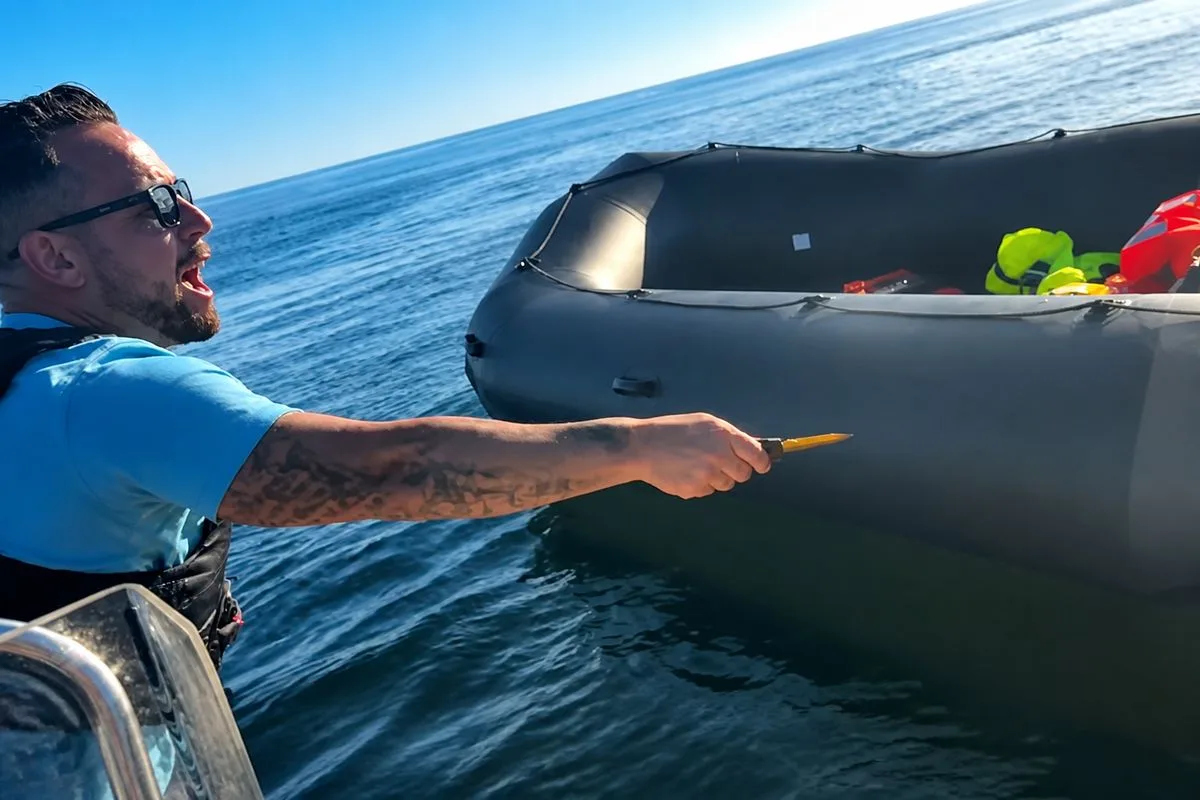
The search term “danny tommo slashes boat” points to a specific incident in the English Channel on 22 September 2026, when far-right activist Daniel Thomas, who styles himself online as Danny Tommo, films himself using a blade to puncture and slash an inflatable dinghy that had been used by asylum seekers attempting to reach the UK. The footage is livestreamed to a large audience, and it quickly spreads across social media, prompting condemnation from refugee charities and a police inquiry.
What makes this more than yet another ugly online stunt is the detail that a rescue worker is on the dinghy at the moment Thomas attacks it. In the video, a rescue worker in an orange high visibility outfit and yellow helmet steps into the dinghy from a larger rescue vessel. Thomas continues anyway, stabbing and slashing at the inflatable side. The sound of air escaping is audible. And then he motors away, after shouting warnings for the worker to get off the boat.
The incident lands in the middle of a tense evening on the south coast, where hundreds of protesters gather in Gosport, Hampshire, after Thomas calls on followers to disrupt the expected arrival of rescued asylum seekers. But Border Force changes the plan, and the people rescued at sea are taken to Dover instead, arriving early on 23 September 2026.

Danny Tommo slashes boat: the key details from the video and the rescue
The Guardian reports that Thomas spends Tuesday afternoon on a small boat in the Channel, filming himself as he tracks two dinghies carrying asylum seekers from France to the UK. As rescue workers assist people onto rescue boats, Thomas approaches one of the dinghies, shouting: “Let’s get rid of that boat.” The dinghy is described as a black inflatable, full of dozens of lifejackets left behind after passengers are moved off it.
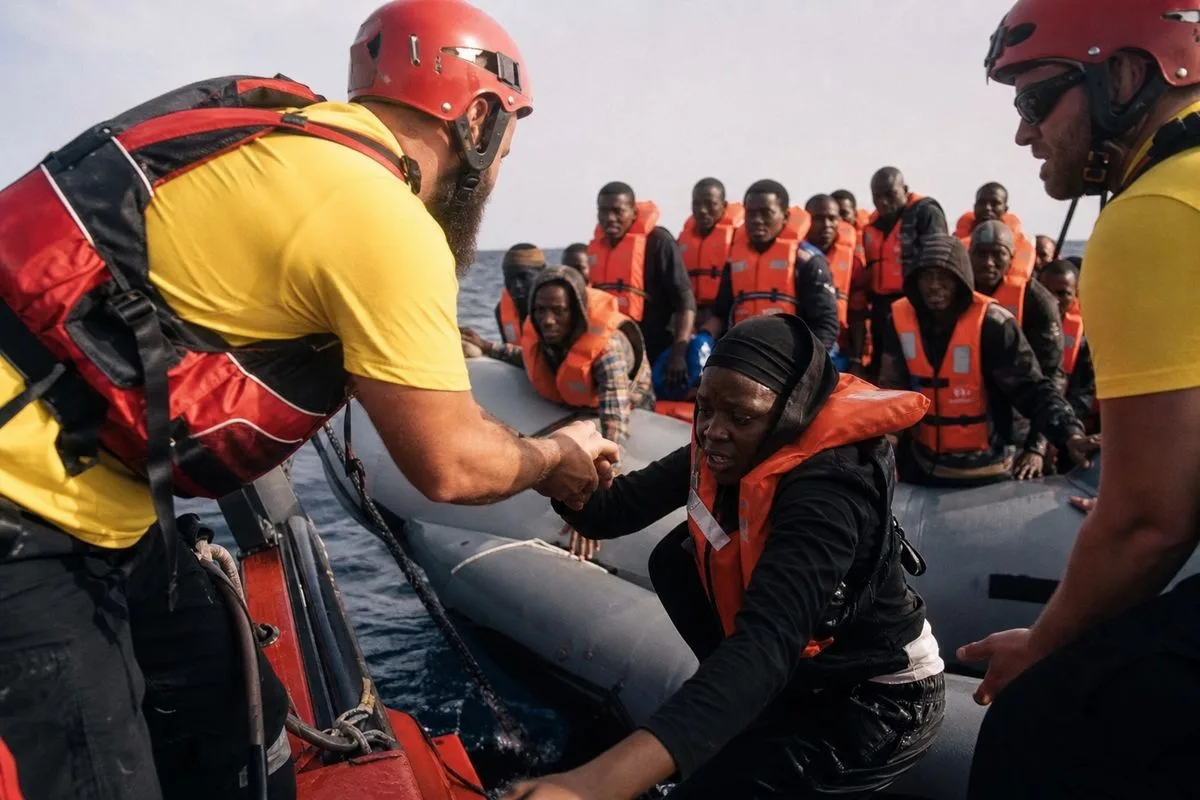
Then comes the moment that turns a provocative act into something far more serious. A rescue worker steps onto the dinghy from a larger rescue boat. Thomas, still filming, drives close and stabs the dinghy several times, slashing its side. He shouts: “This is England. This is not France any more.” He also appears to acknowledge the worker’s presence, shouting: “Get off the boat. You’ve got time to get off the boat.” The livestream does not show what happens next to the rescue worker, beyond the worker climbing back onto the larger vessel after Thomas’s boat departs.
There is also the wider rescue context, which matters because it underlines how precarious the situation already is. According to the RNLI, the rescued asylum seekers have been in the water for 36 hours, described as potentially the longest time small boats passengers have spent crossing the Channel. The RNLI says there are concerns about deteriorating health and fears of a “catastrophic failure” of the dinghy. Separately, the French coastguard says about 60 migrants on a small boat spend more than 33 hours at sea in “precarious conditions”, refusing help because they are determined to reach the UK. The RNLI later facilitates transfer to a Border Force vessel.
Those timings and numbers are important, but there is a limit to what can be stated with certainty from the available reporting. The sources describe a prolonged crossing attempt and a rescue involving RNLI lifeboats and the French coastguard, but they do not provide a full operational timeline, the precise sequence of vessels involved, or the exact coordinates of the incident. That gap becomes central when the legal questions start.
Who is Daniel Thomas, and why is he doing this?
Daniel Thomas is not presented as a random passer-by who gets carried away. He is described as a far-right activist who has spent the summer gathering dozens of nationalist protest groups under an umbrella movement called Patriot Platform. He uses social media to call followers to Gosport for 7pm on 22 September 2026, aiming to disrupt the planned disembarkation of asylum seekers.
He also has a criminal history that shapes how the footage is received. The Guardian reports Thomas has spent two years in prison for attempted kidnapping. Stand Up to Racism, commenting on the incident, says he already has a conviction for knife crime. That combination, a prior conviction involving a knife and a new video showing him “going wild with a knife” at sea, is why charities and anti-racist groups frame the incident as an escalation rather than mere posturing.
And then there is the performative element. Thomas livestreams the act to a huge audience, reported as 100,000 viewers. That number matters because it signals intent: this is not hidden sabotage, it is content. It is designed to be watched, shared, and used as proof of commitment to a cause. In modern protest ecosystems, that kind of spectacle can be the point, even when it drags real people into danger.
It is also worth noting what the protest in Gosport looks like on the ground, because it gives a sense of the atmosphere Thomas is tapping into. Hundreds gather; police vans and officers block roads; some protesters chant “Send them back”. One local protester, Dave Palmer, 43, tells a reporter he works 70 to 80-hour weeks as an air-conditioning engineer and feels the government gives him “nothing”. That grievance politics, whether accurate or not, is the fuel. Thomas provides the spark, and social media provides the oxygen.
The police response and the legal jeopardy after Danny Tommo slashes boat
Hampshire and Isle of Wight Constabulary says it is conducting inquiries into the boat-slashing incident. On the same night, police make six arrests for offences including assaulting an emergency worker and aggravated trespass, with all six in custody on Tuesday night. The reporting does not state whether any of those arrests relate directly to Thomas’s actions at sea, and it does not name the arrested individuals. But it does confirm a significant policing operation around the protests and a willingness to use serious public order and assault powers.

Searchlight Magazine goes further into the potential charging framework, and the stakes are not small. It argues that the presence of another person on the dinghy elevates the incident beyond simple criminal damage. Under English law, it notes, destroying or damaging property while being reckless as to whether life is endangered can carry a maximum sentence of life imprisonment. That is not a prediction of what will happen, it is a statement about the top end of the sentencing range for a particular type of offence, if prosecutors can make it fit and if jurisdiction is clear.
Jurisdiction is the tricky bit. Searchlight points out that the exact location of the incident will determine whether English or French law applies. The dinghy is reportedly shadowed across the Channel by French coastguard vessels, and depending on coordinates it may fall within French territorial waters or the French search and rescue region rather than the UK’s. Under French law, Searchlight says, damaging property by means dangerous to persons carries up to ten years’ imprisonment and a 150,000 Euro fine. Again, that is the maximum described, not a forecast.
There is also a practical point that often gets missed in the heat of online debate. Even if the dinghy is empty of migrants at the moment it is attacked, it is not necessarily “abandoned” in any meaningful legal sense. A rescue worker stepping onto it can establish custody or control for the purposes of criminal damage analysis, as Searchlight notes. And morally, the “empty boat” defence lands with a thud when the video itself shows a worker on board, in open water, during an active rescue operation.
Gosport, Dover, and the protest strategy that backfired
Thomas’s call to action is aimed at Gosport, where protesters believe rescued asylum seekers will be brought ashore. Hundreds turn out early on Tuesday evening. Some also gather near the Haslar immigration removal centre, described as an unopened detention site. Police deploy heavily, blocking roads with vans and officers. It is a familiar pattern: a rumour or a tip about an arrival point spreads, activists mobilise quickly, and local policing resources are dragged into managing a flashpoint.
But Border Force does not play along. Instead of disembarking in Hampshire, the Border Force vessels carrying the rescued asylum seekers land in Dover early on Wednesday. The Guardian describes this as a relocation away from Hampshire, and includes a quote from Donna Jones, the police and crime commissioner for Hampshire and the Isle of Wight, saying she urges Border Force to transfer the migrants to Dover because “Hampshire is not prepared or set up to process people travelling into Britain this way”, and because of the burden on police.
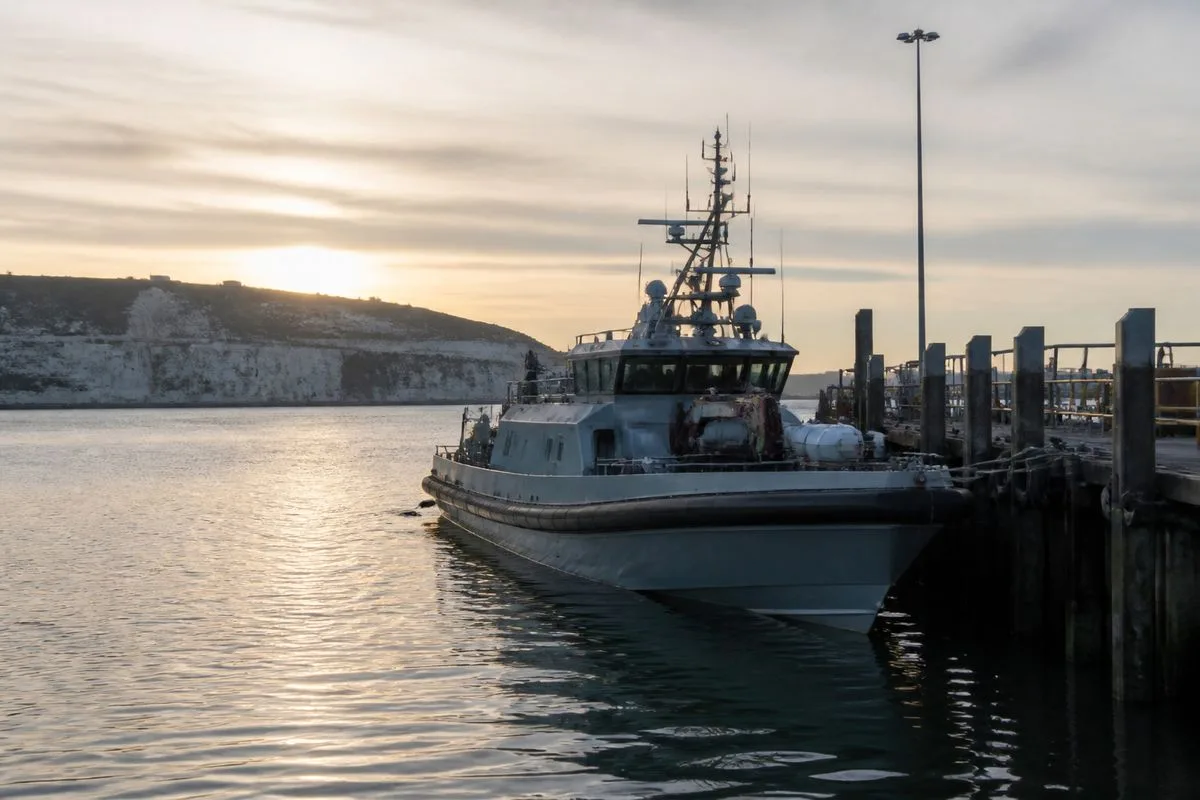
That decision is not just a logistical footnote. It shows how protest activity can shape operational choices, and how the state responds when it anticipates disorder. Moving disembarkation points is a way to reduce immediate confrontation, but it also risks creating a cat-and-mouse dynamic. Activists will try to predict the next landing location; authorities will try to keep it uncertain. And in that environment, the temptation for some individuals to escalate, to “do something” dramatic for an audience, grows.
There is also a blunt reality here. Even if a protest successfully disrupts a landing at one location, it does not change the fact that people are already at sea, already in distress, and already being rescued. So the “strategy” becomes less about policy outcomes and more about theatre. That is why the Channel knife stunt, filmed for tens of thousands, fits the pattern so neatly. It is protest as performance, with real-world risk attached.
The Bigger Picture
This story is not only about one man with a knife. It is about how migration politics, online mobilisation, and the attention economy collide in a place where the margin for error is basically zero. The Channel is not a stage set. It is cold, busy, and unforgiving. When the RNLI talks about fears of a “catastrophic failure” of a dinghy, that is not rhetoric, it is an operational assessment. Add a private boat deliberately damaging equipment in the middle of a rescue, and the risk profile changes instantly, not just for migrants but for professional rescuers too.
There is also a deeper shift in the nature of far-right activism on the UK’s coastline. The reporting describes Thomas pulling together multiple nationalist groups under Patriot Platform, then directing them towards a specific place and time. That is a move from diffuse online anger to coordinated, location-based action. And it is exactly the kind of organising that forces policing decisions, like moving disembarkation to Dover, and increases the chance of confrontation with emergency workers. When activists frame themselves as “enforcers” at sea, they are not merely protesting, they are attempting to insert themselves into border control and rescue operations. That is a big deal, because it blurs the line between speech and direct interference.
Finally, the legal complexity around jurisdiction is not just a lawyer’s parlour game. It is a reminder that the Channel is a shared operational space, with overlapping responsibilities and political sensitivities. If an incident occurs in or near French waters, French authorities may have a view. If it occurs under UK jurisdiction, UK prosecutors may pursue it. Either way, the underlying question is the same: what consequences follow when political activism turns into physical endangerment during a rescue? If the answer is muddled or slow, copycats notice. And they will not all be as “lucky” as Thomas appears to be in this footage, where the rescue worker gets off the dinghy in time.
What happens next, and what to watch for
In the immediate term, the key development is the police inquiry confirmed by Hampshire and Isle of Wight Constabulary. Investigators will be looking at the video itself, any supporting footage from rescue organisations, and potentially tracking data to establish where exactly the incident occurs. That location question is not academic, it shapes everything from which force leads to which laws apply, and whether cross-border cooperation is required.

There is also the question of deterrence. If the incident is treated as mere criminal damage, it risks being read by supporters as a slap on the wrist. If it is treated as an offence involving recklessness as to endangering life, the potential sentencing range becomes dramatically more serious, as Searchlight notes. Prosecutors, if they become involved, will also have to consider public interest, the safety of emergency workers, and the message sent to anyone tempted to “patrol” the Channel for content.
For the wider public, the most important thing to understand is what this incident says about the direction of travel. The footage shows a political activist approaching an active rescue scene and attacking equipment with a blade while a rescue worker is on board. That is not protest in the traditional sense. It is interference. And it forces a hard conversation about how the UK protects rescue operations from being turned into battlegrounds for online movements.
As for the phrase people are typing into search bars, “danny tommo slashes boat”, it is likely to keep circulating because it compresses a complicated, disturbing event into a few words. But the reality behind it is messy, dangerous, and legally fraught. The next chapter will be written by investigators, prosecutors, and possibly courts. And by the operational choices made the next time a rescue boat meets a small dinghy in the Channel, with cameras watching.
This article was created with Blog Builder AI