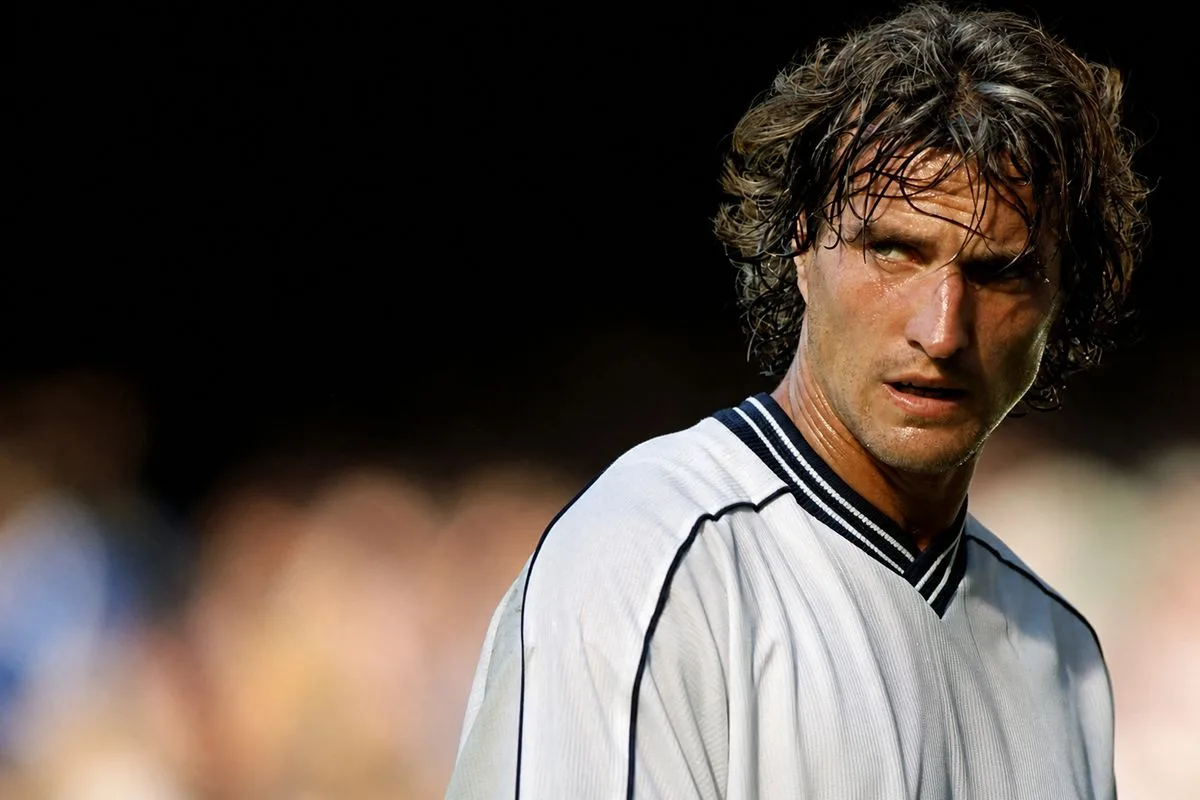
David Ginola at Tottenham: why Spurs’ 2026 tribute matters, and what his 1999 peak still tells us
David Ginola returns to the spotlight in 2026, and Spurs are leaning into the legend
David Ginola is not short of highlight reels, but Tottenham Hotspur’s decision to publish a fresh club profile on 8 July 2026 is still telling. It is a modern club doing what modern clubs do, curating their history, sharpening the story, and reminding supporters that some players are more than a nostalgic footnote. Ginola is one of those. And in a football economy obsessed with the next signing, that kind of deliberate looking back is a statement.
The Spurs profile is straightforward on the facts, but loaded with meaning. It frames Ginola’s Tottenham years as 1997 to 2000, lists 127 appearances and 22 goals, and places him at the centre of a rare bright moment in that era, the 1999 League Cup win. It also foregrounds the individual awards that still make people do a double take: PFA Player of the Year and FWA Footballer of the Year, both in 1999. Those are not minor honours, they are the ones that define a season.
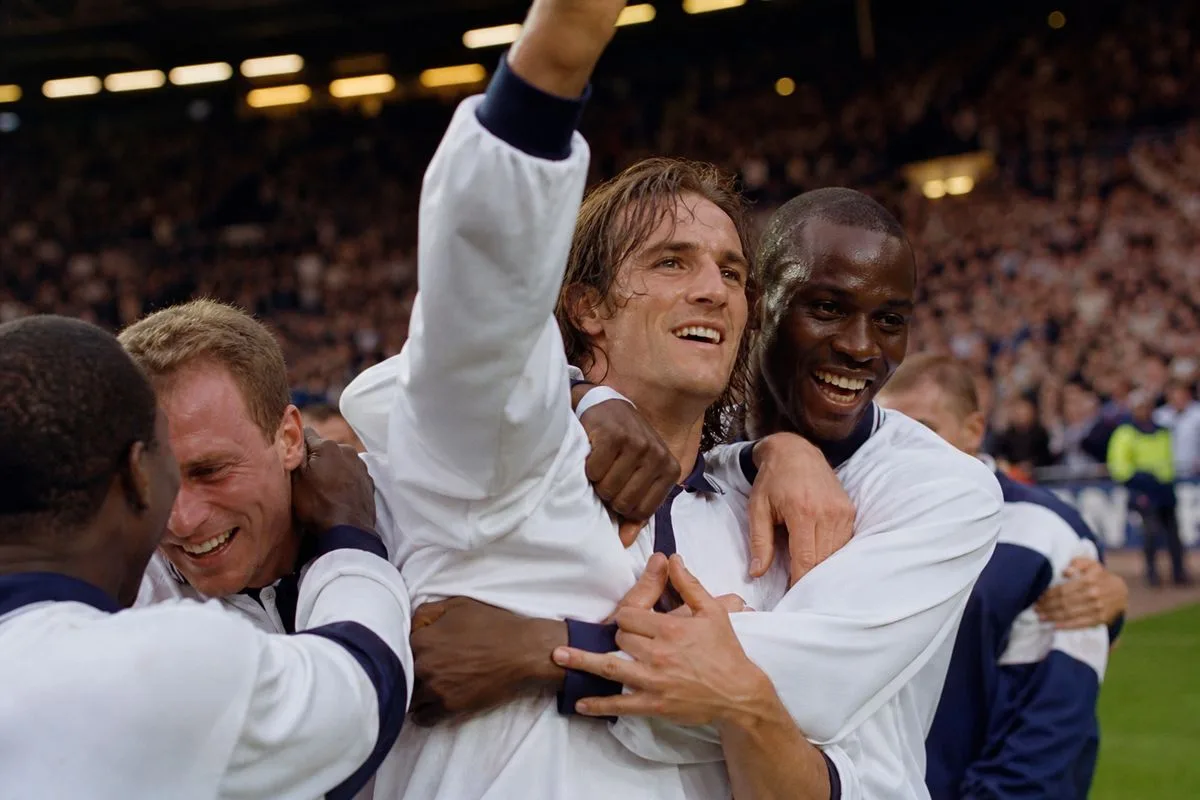
And that is the hook Spurs are going for in 2026. Not just “remember this great winger”, but “remember the season when a Tottenham player outshone a treble winning Manchester United in the eyes of his peers and the press”. That is the kind of framing that keeps a legend alive for people who never saw him play, and it also reasserts Tottenham’s place in the cultural memory of English football (which, fair enough, is a competitive space).

David Ginola’s Tottenham numbers, and the 1999 season that refuses to fade
Start with the hard detail Spurs put on the record: 127 appearances, 22 goals, and a League Cup winner’s medal in 1999. Those figures matter because they anchor the conversation. Ginola is often discussed as an artist, a vibes player, a man of moments. But he is also productive across three seasons, and he is a central figure in a trophy winning campaign, which is the currency clubs trade in when they build their internal pantheon.
The club profile makes a point of the 1998 to 1999 context, and it is worth sitting with. Manchester United win the treble that season, and the Spurs write up name checks the kind of squad that tends to dominate awards: Peter Schmeichel, Gary Neville, Jaap Stam, David Beckham, Roy Keane, Paul Scholes, Ryan Giggs, Teddy Sheringham, Dwight Yorke, Andy Cole. Yet Ginola wins both major individual awards. Spurs’ implicit argument is simple: if the best team in the country has all those household names, and the awards still go to Ginola, then Ginola must have been operating on a different level.
There is also a very Tottenham specific piece of mythology here. Spurs highlight the League Cup quarter final against United as the only trophy Alex Ferguson’s side do not win in that treble season. Ginola is described as the inspiration in that tie, and Tottenham go on to beat Leicester City in the final. In other words, Ginola is not just a stylish winger in a mid table side, he is the man who helps derail the most dominant English campaign of the era, at least in one competition. That is a powerful narrative, and Spurs know it.
And then there is the line that sums up his brand: “David didn’t do tap ins.” Spurs list a run of spectacular goals, including FA Cup strikes against Barnsley, Leeds, Watford and Wimbledon, plus a moment against United in the League Cup, a shift away from Giggs and a finish into the top corner. They also cite Premier League goals against Liverpool, Chelsea, Middlesbrough and Everton. The club does not provide dates or totals for those specific matches in the profile, so it is not possible to quantify them from this source alone. But the selection is revealing. Spurs are not selling volume, they are selling theatre.
Before Spurs, David Ginola is already a star, and England is the next act
Tottenham’s 2026 profile sketches the pre Spurs story in broad strokes, but the key beats are there. Ginola is born in Gassin, France, and his performances for Paris Saint Germain draw English attention. Spurs specifically mention a European Cup Winners’ Cup semi final win against Arsenal in 1994 as part of the evidence. That detail matters because it places Ginola in the long running Anglo French football conversation of the 1990s, when English clubs are starting to look across the Channel more seriously, and French players are beginning to reshape the Premier League’s technical ceiling.
The next step is Newcastle United, and again Spurs’ profile keeps it concise but meaningful. Ginola “caught the eye of Newcastle” and helps the club to successive second place finishes in the Premier League in 1995 to 1996 and 1996 to 1997. That is not a throwaway line. Those seasons are part of the Premier League’s foundational mythology, the era when Newcastle are the great entertainers, when the league’s identity is being formed in real time. Ginola is not a peripheral figure in that story, he is one of the faces of it.
By the time he arrives at Tottenham in 1997, he is already known as a player who can carry a match on his own. That matters for understanding why his Spurs years resonate so strongly. Tottenham in the late 1990s are not the Champions League regulars of later decades. They are a club with a huge identity and huge expectations, but inconsistent outcomes. A player like Ginola fits perfectly into that environment because he offers something supporters can hold onto even when the table is not kind. He makes going to the ground feel worth it.
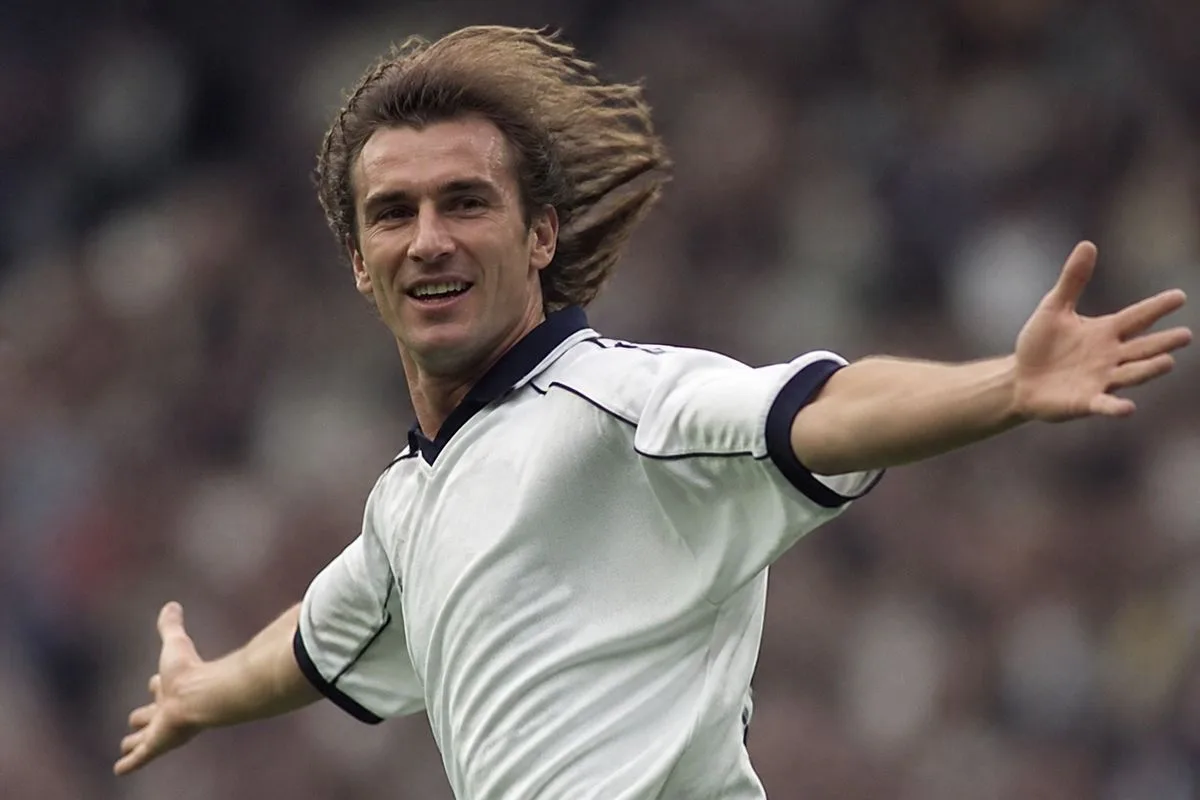
And after Tottenham, Spurs note spells at Aston Villa and Everton, before retirement in 2002. Again, the club does not provide appearance or goal totals for those later spells in the profile, so it would be wrong to pad the story with numbers not present in the source. But the shape of the career is clear: France, then England, then a gradual winding down after the peak. A classic arc, really.
David Ginola’s 1999 awards, and what they say about football culture then and now
The most striking thing in Spurs’ 2026 profile is not the goals list or the trophy, it is the insistence on those two awards: PFA Player of the Year and FWA Footballer of the Year, both in 1999. In today’s football conversation, individual recognition is often filtered through data models, expected goals, and social media consensus. Back then, these awards are still heavily shaped by weekly impressions, by the feeling a player leaves in stadiums and press boxes. Ginola is, in many ways, the perfect candidate for that era’s voting logic.
He is also a reminder that “best player” does not always mean “best player in the best team”. Manchester United’s treble winners have a strong case for sweeping everything, and yet they do not. That suggests Ginola’s season is not just good, it is distinctive. It cuts through. It forces people to talk about Tottenham even when Tottenham are not the dominant force. And that is a kind of power that does not show up neatly in a spreadsheet.
There is a second layer here too. Spurs’ profile explicitly contrasts Ginola with United’s galaxy of stars, and that contrast is doing work in 2026. It is a way of saying: Tottenham can produce, attract, and elevate players who sit at the very top of the English game’s cultural hierarchy. Not every club can credibly make that claim, and Spurs are clearly keen to underline it at a time when brand, heritage, and global attention are part of the competitive landscape.
And it raises an interesting question for the modern game. Would a Ginola type season be rewarded the same way now? Maybe. But the conditions have changed. The Premier League is more international, the spotlight is more fragmented, and the conversation is more statistical. Ginola’s magic is obvious to the eye, but awards today often track team success more tightly, and narratives are built at scale. In 1999, a single player’s weekly brilliance can dominate the national mood in a way that is harder to replicate now.
“David didn’t do tap ins”: the aesthetics of Ginola, and why Spurs supporters still talk about him
Tottenham’s profile leans hard into the idea of Ginola as a showman, and it is not subtle. The club talks about a “showreel of spectacular goals” and then reels off opponents like a greatest hits track list. The point is not merely that he scores, it is how he scores. The specific example Spurs choose against Manchester United, a shift away from Ryan Giggs and a finish into the top corner, is the kind of description that instantly conjures a picture even for readers who have not seen the clip.
This is where Ginola’s legacy becomes different from many other very good players. Plenty of footballers have better raw numbers. Plenty win more trophies. But not many become shorthand for a feeling. Ginola is remembered as a player who makes the game look glamorous, who makes defenders look slightly foolish, who turns a routine attack into something you talk about on Monday morning. Spurs’ “no tap ins” line is basically a branding slogan, but it is also a fair summary of the way supporters remember him.
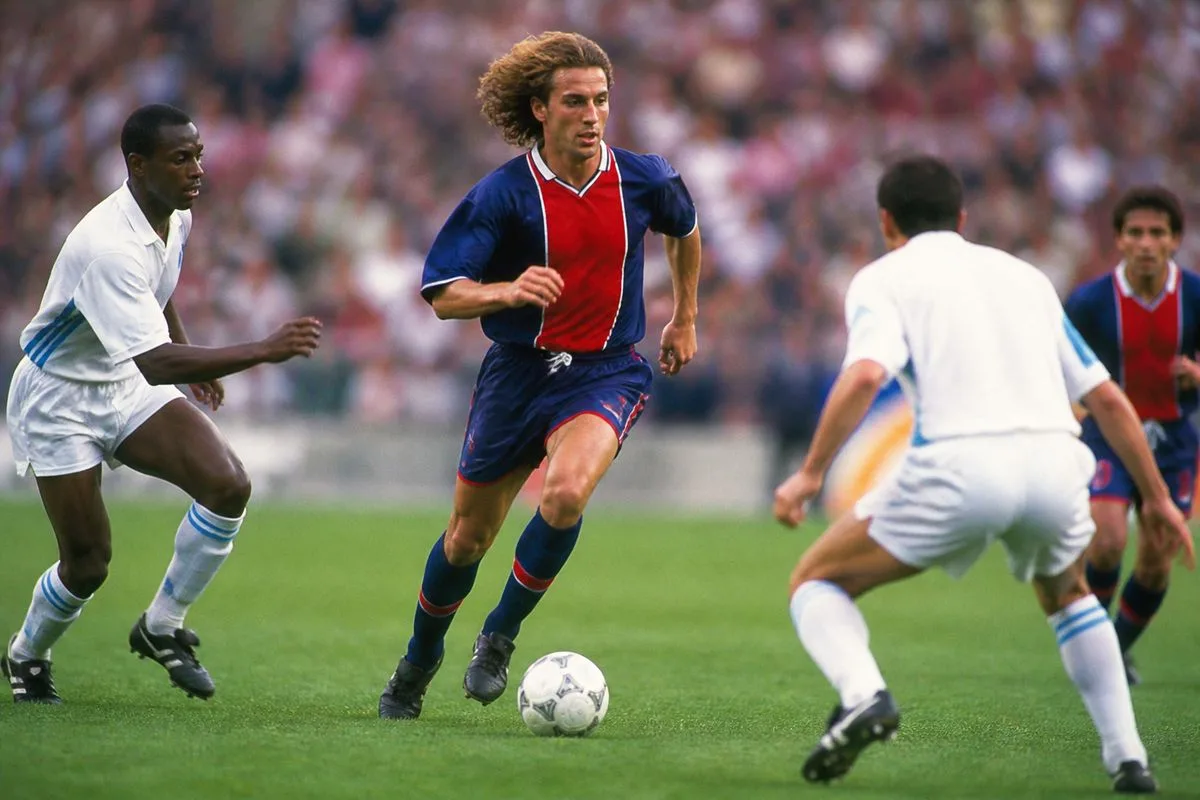
There is also something about his fit with Tottenham’s self image. Spurs have long sold themselves, internally and externally, as a club that values style. Sometimes that is a stick used to beat them with, sometimes it is a genuine cultural thread. Ginola embodies the romantic version of that identity. He is not just effective, he is entertaining. And in a period when Tottenham are not collecting league titles, entertainment becomes part of the club’s emotional economy.
In 2026, that matters because clubs are competing for attention as much as points. A player like Ginola is content rich. He is easy to package into short clips, easy to celebrate on anniversaries, easy to introduce to younger fans who know him mainly as a name. Tottenham’s profile reads like an attempt to lock that down, to make sure the club’s version of Ginola remains the dominant one: the inspiration, the artist, the award winner, the man who helps topple United on the way to silverware.
Life after the pitch: David Ginola’s media career, health scare, and the pull of Spurs Legends
Tottenham’s 2026 write up does not pretend Ginola’s story ends with retirement. It notes that he becomes a TV personality in France, including hosting the French equivalent of Match of the Day. That detail is important because it shows how Ginola’s fame evolves. Some ex players disappear into coaching or business. Ginola stays in the public eye, and he does it in a role that suits his persona: front of camera, talking football, still part of the spectacle.
The profile also mentions a heart scare in 2016, and that he recovers. Spurs do not provide medical specifics, and it would be irresponsible to speculate beyond what is stated. But the inclusion itself tells you something about how modern clubs handle the biographies of their legends. They are not just celebrating the player, they are acknowledging the human story, the vulnerability, the fact that heroes age and face real world problems like everyone else.
Then comes a detail that ties the whole thing back to Tottenham’s present day identity: Ginola returns in March 2019 to play for Spurs’ Legends team against Inter at Tottenham Hotspur Stadium. That is not just a nice cameo. Legends matches are part community event, part brand exercise, part emotional reconnection. They allow a club to bring its past into its new stadium, to stitch eras together. For supporters, it is a chance to see a favourite again, even if the legs are not what they were.
And for Tottenham, it is also a way of reinforcing continuity. The stadium is new, the squads change, the managers come and go. But the club wants to say: this is still Tottenham, and these are still our people. Ginola, with his mix of glamour and genuine achievement, is a perfect ambassador for that message.
What Tottenham’s 2026 David Ginola profile really signals about modern football memory
On the surface, Tottenham publishing a “Spurs Legends” profile is not exactly groundbreaking. Clubs do heritage content all the time. But the timing and the emphasis are worth reading as a signal. In 2026, football is a constant churn of fixtures, transfers, and online debate. Attention is scarce. So clubs increasingly invest in what can be controlled: their own narrative, their own archive, their own definition of greatness.
Ginola is a particularly useful figure in that project because he offers multiple angles at once. There is the measurable contribution, 127 appearances and 22 goals. There is the team success, the 1999 League Cup. There is the individual validation, the PFA and FWA awards in 1999. And there is the aesthetic hook, the spectacular goals, the “no tap ins” line, the idea that he is a player you pay to watch. Put all that together and you have a legend who can speak to different generations and different types of fan.
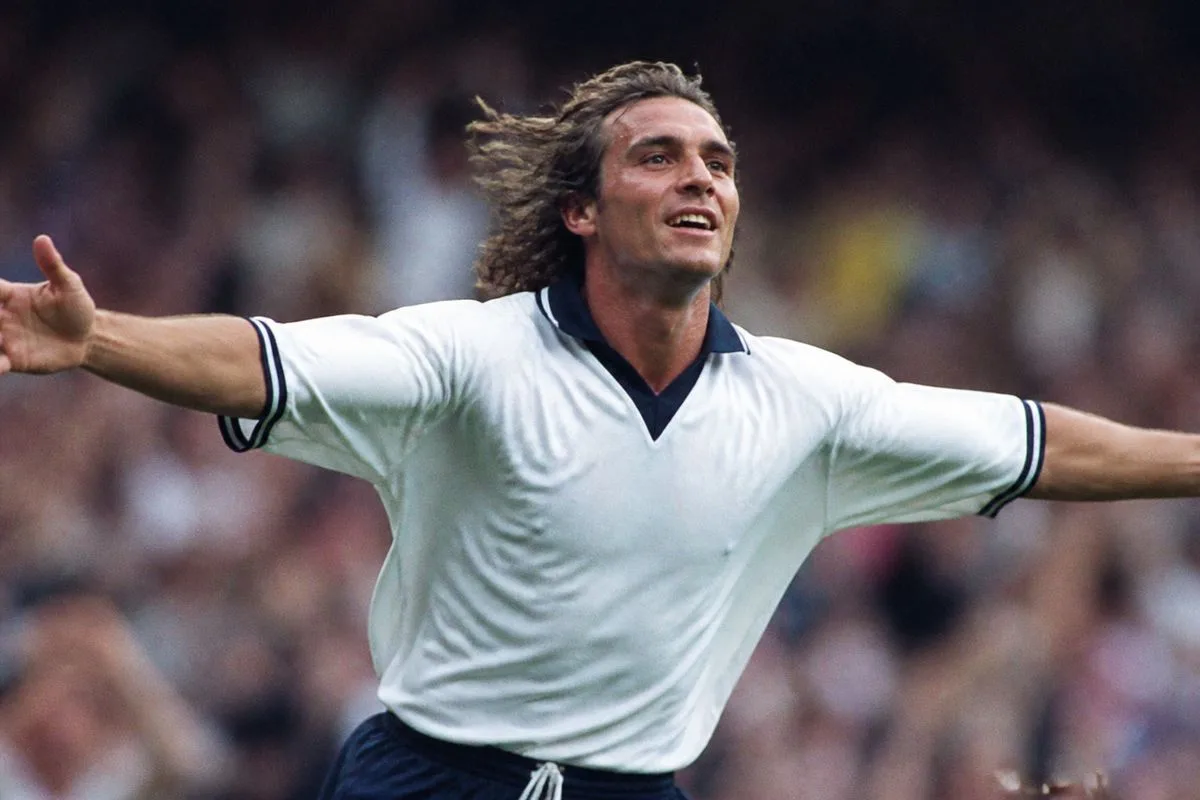
There is also a subtle competitive edge. Spurs’ profile explicitly frames Ginola’s 1998 to 1999 season against Manchester United’s treble winners. That is not accidental. It is a way of placing Tottenham in the same conversation as the era’s dominant force, even if only through the lens of one player’s brilliance and one cup run. In a world where club status is constantly debated, these little narrative moves matter.
And finally, it underlines something about how football history is remembered. Not every great player is remembered equally. The ones who endure tend to have a story that can be told cleanly: a peak season, a signature style, a trophy, a moment against a rival. Ginola ticks those boxes. Tottenham’s 2026 profile is, in effect, the club making sure that story stays sharp, stays shareable, and stays attached to Spurs.
Closing thoughts: David Ginola’s Spurs years as a template for individual brilliance in a team game
David Ginola’s Tottenham spell, as Spurs present it in 2026, is a reminder that football legacies are not built only on medals. Yes, the 1999 League Cup matters, and yes, the 127 appearances and 22 goals matter. But what really keeps Ginola alive in the conversation is the sense that he is a weekly event. A player who can turn a match, and turn heads, even when the wider project is not perfect.
It is also a reminder that individual awards can sometimes capture something true about a season that league tables do not. In 1999, Ginola wins both the PFA Player of the Year and the FWA Footballer of the Year in a year dominated by Manchester United’s treble. That does not happen by accident. It happens because a player is so compelling that he becomes unavoidable.
And that is why Tottenham’s 2026 tribute lands. It is not just nostalgia. It is a club pointing to a moment when one of their players is, genuinely, the most celebrated footballer in the country. For anyone searching “david ginola” today, that is the core of the story: the peak was real, the impact was real, and the memories, for Spurs supporters at least, are not going anywhere.
This article was created with Blog Builder AI