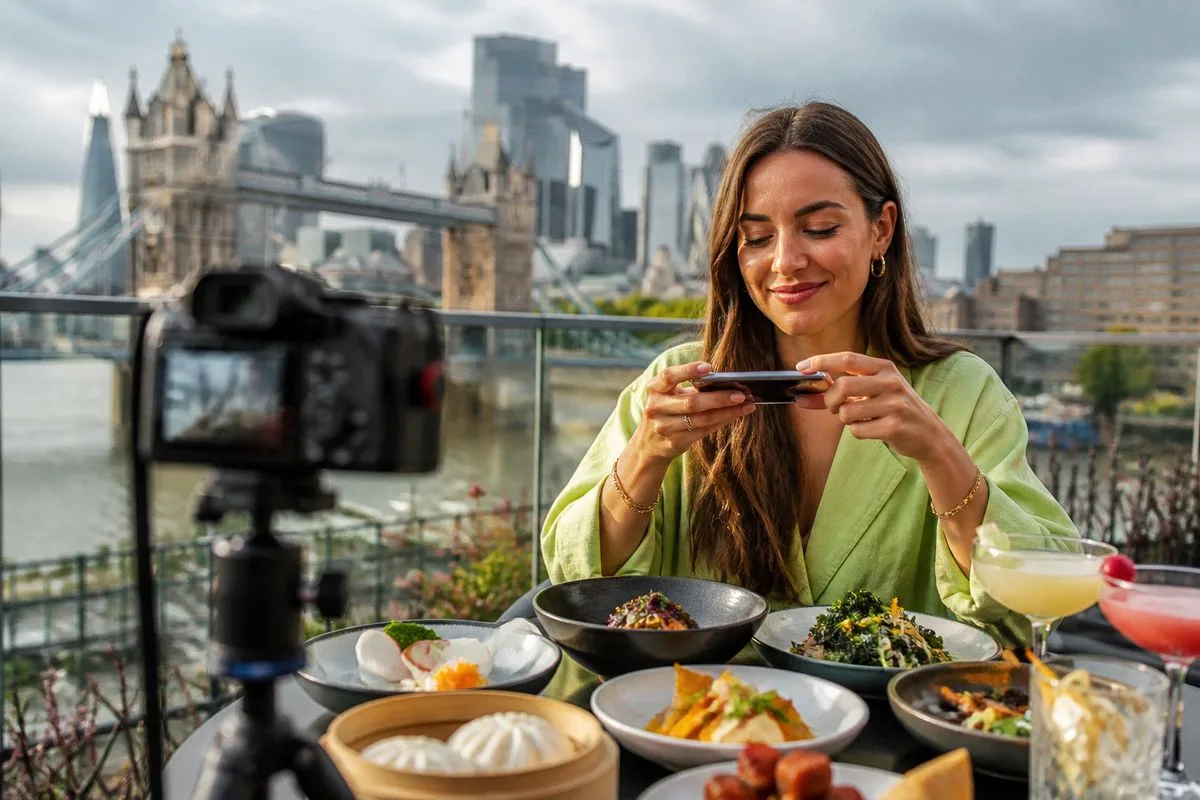
London Food Blogger Guide 2026: Choosing the Right Creator to Follow
Why choosing the right london food blogger in 2026 actually matters
Following a london food blogger used to be a simple thing, find someone with decent taste, save a few posts, book a table. In 2026, it is a different game. London’s food scene is louder, faster, and more algorithm-driven than ever, and the creators shaping what people eat are no longer just hobbyists with a camera phone. They are authors, former chefs, full-time reviewers, and multi-platform publishers with audiences that rival traditional media.
That shift is exactly what sits behind a new, very practical development: a 2026 ranking of Top 120 London Food and Drink Influencers compiled by Joli. The list is not just a popularity contest. It explicitly ranks creators by content quality and by how much of their output is actually about food and drink. That second point is the quiet killer. Plenty of London accounts look “foodie” at a glance, but their feeds are really lifestyle, travel, and general city content with the occasional restaurant thrown in.
So the decision readers face is straightforward but surprisingly consequential: which type of London food creator is worth following for their needs, recipe inspiration, restaurant discovery, dietary preferences, or simply entertainment. And for brands, the stakes are higher still, because the wrong partnership can mean wasted budget, mismatched audiences, and content that does not convert (fair enough, it happens).
This guide treats the 2026 ranking as the news peg, then turns it into a comparison and “vs” framework. It compares the biggest London food and drink creators listed, grouped by what they actually do best, and what that means for followers and for the industry.

The 2026 development: Joli’s Top 120 London Food and Drink Influencers list
The headline event here is the publication of Joli’s Top 120 London Food and Drink Influencers in 2026. The list spans bloggers, Instagram creators, and TikTok influencers based in London. Crucially, it includes two quantitative signals that make it more useful than the usual “top foodie accounts” round-up: follower counts and a Food and Drink percentage that indicates how much of their content is focused on the category.
At the very top end, the numbers are significant. Pretty Little London sits at 1.60m followers with 68% Food and Drink and 4k posts, positioning it as a lifestyle-led account with a major food footprint. In contrast, creators such as Ben Lippett (@dinnerbyben) show 1.31m followers with 100% Food and Drink across 824 posts, signalling a purer food proposition.
The list also highlights how platform-native London food content has become. Eating with Tod is shown with 1.30m followers and 100% Food and Drink with 1.2k posts. Matt Adlard appears with 1.19m followers, 100% Food and Drink, and 783 posts, described as a self-taught pastry chef and best-selling author. And then there are creators whose bios point to broader commercial ecosystems: books, Substack recipes, merch, management, and partnership enquiries.
What makes this development meaningful in 2026 is not that a list exists. Lists are everywhere. It is that the list codifies the market into measurable categories, and it makes a subtle argument: the best London food creators are not only those with reach, but those with consistent topical focus. That is a direct response to how audiences now consume food content, quickly, repeatedly, and with very little patience for off-topic filler.
London food blogger vs London lifestyle creator: which one should readers follow?
This is the first big “vs” decision, and it is where many people get it wrong. A London food blogger in the strict sense is food-first, meaning the majority of their output is recipes, cooking technique, restaurant critique, or food discovery. A London lifestyle creator might still post plenty of restaurants, but food is one pillar among several, such as travel, hotels, events, bars, and general city guides.
The Joli list makes this distinction visible. Pretty Little London is explicitly described as “Lifestyle, food, travel and everything pretty”, and its 68% Food and Drink score reflects that. Exploring London, run by lifelong Londoners Baj and Vaish, is positioned as a London guide since 2015 with “things to do, lifestyle, pop-ups, veggie food and more”, and shows 64% Food and Drink with 843.0k followers and 2.7k posts. These accounts are excellent for planning a day out, but they are not always the best for deep food decision-making.
On the other side are creators with 100% Food and Drink focus. That includes Ben Lippett, Eating with Tod, Matt Adlard, Margie Nomura (@desertislanddishes) with 975.5k followers and 1.1k posts, and meekothefoodie with 954k followers and 308 posts. These are the accounts that tend to deliver repeatable value, because the follower knows what they are getting every time.
And there is a practical implication. Lifestyle-led accounts can be brilliant for discovery, but food-first creators are often better for reliability. If someone wants weeknight dinner ideas, a former private chef whose entire brand is “Dinner Tonight” is a safer bet than a general London guide. If someone wants pastry technique, a self-taught pastry chef and author is likely to go deeper than a generalist. It is not snobbery, it is just matching the tool to the job.
Comparison table: top london food blogger options by focus, scale, and format
Below is a side-by-side comparison of prominent creators from the 2026 list. It is not a “best to worst” ladder. It is a practical snapshot of what each creator is optimised for, based on the details provided: follower count, Food and Drink percentage, posting volume, and positioning.
One caveat: the source material provides follower counts and content focus percentages, but it does not provide engagement rates, audience demographics, or revenue figures. So this comparison sticks to what is actually known, then draws careful, clearly labelled implications.
| Creator | Followers | Food and Drink focus | Posts | What they are best for |
|---|---|---|---|---|
| Pretty Little London | 1.60m | 68% | 4k | Lifestyle-led London discovery with strong food coverage |
| Ben Lippett (@dinnerbyben) | 1.31m | 100% | 824 | Food-first recipes and creator-led publishing (YouTube, Substack) |
| Eating with Tod | 1.30m | 100% | 1.2k | High-volume food content and broad appeal |
| Matt Adlard | 1.19m | 100% | 783 | Pastry and dessert expertise with author credibility |
| Margie Nomura (@desertislanddishes) | 975.5k | 100% | 1.1k | Weeknight dinners and practical home cooking |
| Exploring London | 843.0k | 64% | 2.7k | London guide content with food as a major pillar |
| Zena Kamgaing (@zenaskitchen) | 616.0k | 86% | 1.4k | Bold flavours and accessible recipes with cookbook tie-in |
| Richard Makin (@schoolnightvegan) | 545.4k | 82% | 1.4k | Vegan cooking with a clear, repeatable positioning |
What the 2026 list reveals about the london food blogger economy
The first thing the ranking makes obvious is that London’s creator economy around food is now fully professionalised. Several of the top names are described as best-selling authors, cookbook writers, or former chefs. That matters because it changes the trust dynamic. A creator with a culinary background or a published body of work can justify more authority, and audiences often respond to that with deeper loyalty, not just casual scrolling.
The second insight is the rise of content specialisation. The Food and Drink percentage is a proxy for niche clarity. A creator at 100% is effectively telling the algorithm and the audience the same thing: “this is what you come here for”. In a crowded market, that clarity is a competitive advantage. It also makes commercial partnerships cleaner, because a brand knows it is buying into a food-focused channel rather than a mixed lifestyle feed.
Third, the list hints at a split between utility and entertainment. High-volume posters with broad appeal can dominate feeds and trends, while recipe-led creators can become “saved post” machines, the kind of content people return to on a Tuesday evening when they have got 20 minutes and no plan. The source material does not provide save rates or watch time, but the positioning and posting volume strongly suggest different consumption patterns.
And finally, there is a subtle London-specific point. Accounts like Exploring London and Pretty Little London show that “food content” in the capital is often inseparable from place. Neighbourhoods, pop-ups, openings, and the general churn of the city are part of the product. That is why London remains such a fertile market for food creators, it is not just restaurants, it is constant change.
Pros and cons: food-first london food blogger vs lifestyle-led London creator
This is where the decision becomes actionable. The best choice depends on what the follower wants, and what they are willing to tolerate in their feed. Some people love a mixed bag. Others want a clean, food-only stream with zero distractions. Neither is “right”. But each comes with trade-offs.
To keep it practical, the comparison below treats the two approaches as options. Food-first creators include those listed at 100% Food and Drink such as Ben Lippett, Eating with Tod, Matt Adlard, Margie Nomura, and meekothefoodie. Lifestyle-led creators include those with lower Food and Drink percentages such as Pretty Little London at 68% and Exploring London at 64%.
Option A: Food-first london food blogger
- Pros: Higher topical consistency, easier to trust for recipes and food decisions, fewer off-topic posts.
- Pros: Often clearer expertise signals, for example former chef, private chef, pastry specialist, cookbook author.
- Pros: Better for building a personal “library” of saved recipes and repeatable recommendations.
- Cons: Can be narrower, less useful for planning a full day out beyond food.
- Cons: If the creator’s style does not match the follower’s tastes, there is less variety to compensate.
Option B: Lifestyle-led London creator with strong food coverage
- Pros: Great for discovery, especially when food is bundled with travel, events, and neighbourhood guides.
- Pros: More variety, which can keep feeds feeling fresh and less repetitive.
- Pros: Often better for visitors who want a broader London itinerary, not just meals.
- Cons: Food content can be diluted, followers may need to sift through non-food posts.
- Cons: Harder to judge depth of food expertise when the brand is intentionally broad.
Which london food blogger type fits which audience? A practical “choose this if” guide
Different audiences use food content differently. Some want to cook. Some want to book. Some want to be entertained. The 2026 ranking helps because it surfaces both scale and focus, letting followers choose creators whose output matches their intent.
For home cooks who need reliable weeknight ideas, creators positioned around dinner practicality stand out. Margie Nomura’s “Dinner Tonight” framing, combined with 975.5k followers, 100% Food and Drink, and 1.1k posts, signals a high-volume archive of usable content. Zena Kamgaing, with 616.0k followers and 86% Food and Drink, positions around “easy recipes” and “big, bold flavours”, which tends to suit people who want impact without restaurant-level complexity.
For baking and dessert obsessives, Matt Adlard is the obvious comparison point in the provided data: 1.19m followers, 100% Food and Drink, and a clear pastry identity. That kind of specialism matters because pastry is less forgiving than many savoury dishes. People following for technique usually want someone who stays in their lane and goes deep.
For vegan or plant-forward audiences, Richard Makin’s School Night Vegan offers a distinct proposition, “Anything you can cook, I can cook vegan”, with 545.4k followers and 82% Food and Drink. The percentage suggests some content may sit outside strict food posts, but the brand promise is unambiguous. And that is often what vegan audiences value most, substitutions, confidence, and consistency.
For people who treat London as a constant discovery mission, lifestyle-led accounts can be the better daily companion. Pretty Little London’s scale at 1.60m followers and Exploring London’s long-running positioning as a London guide since 2015 both point to breadth. These accounts are often strongest when the question is not “what should I cook”, but “where should we go this weekend, and what should we eat while we are there”.
Industry impact: what this ranking signals for restaurants, publishers, and brands
For restaurants, the list is a reminder that influencer marketing in London is no longer a side hustle economy. The biggest creators here operate at serious scale, with follower counts from the mid-hundreds of thousands up to 1.60m. That changes expectations on both sides. Restaurants increasingly need to think like media partners, not just hosts offering a free meal. And creators, especially those with 100% food focus, are effectively running editorial channels with their own audience contracts.
For publishers and traditional food media, the list underlines a structural shift that has been building for years: creators are now the front door for food discovery. Several profiles explicitly reference books, YouTube series, Substack recipes, and management. That is the modern stack: audience first, then products, then partnerships. It is not exactly groundbreaking in 2026, but it is now the default model rather than the exception.
For brands, the Food and Drink percentage is the most commercially useful metric in the source material. A creator at 100% offers category purity, which can reduce wasted impressions. A creator at 64% or 68% offers broader lifestyle adjacency, which can be ideal for travel, hospitality, or premium consumer goods that want context beyond the plate. The point is that “best” depends on the brand’s objective, awareness, consideration, or direct response.
And there is a reputational angle too. As the market professionalises, audiences become more sensitive to authenticity. The source material does not provide disclosure practices or editorial policies, so it is not possible to judge transparency from the list alone. But the mere existence of rankings based on content quality suggests the market is rewarding creators who can maintain trust while scaling output. That is harder than it looks.
Historical context: from blog-era London food writing to platform-native influence
London’s food blogging scene has always been competitive, but the centre of gravity has moved. The early blog era rewarded long-form reviews and detailed write-ups. Then Instagram shifted the emphasis to visuals and short captions. TikTok accelerated everything again, prioritising pace, personality, and repeatable formats. The 2026 list reflects that evolution by treating “bloggers, Instagram creators, and TikTok influencers” as one blended ecosystem.
What is different now is the scale and the commercial maturity. A creator with 1.30m or 1.60m followers is not simply a hobbyist with a popular account. They are operating a media business, whether they call it that or not. The bios in the source material hint at this: booking links, partnership enquiries, management, books, merch, and multi-channel publishing. London food content has become a career path.
There is also a shift in what audiences want from a london food blogger. The old model was “tell me what is good”. The new model is “show me, quickly, and make it doable”. That is why recipe-led creators with clear positioning, weeknight dinners, healthy-ish high protein, vegan swaps, bold flavours, can build durable followings. They are not just recommending; they are solving daily problems.
And London itself plays a role. The city’s constant openings, pop-ups, and neighbourhood churn create an endless content engine. That is why guide-style accounts remain powerful even with lower Food and Drink percentages. They are selling the feeling of London as much as the food. For many followers, that is the point.
The Verdict: the best london food blogger choice depends on intent, not hype
If the follower’s goal is better food decisions with minimal noise, the recommendation is simple: prioritise a food-first london food blogger with 100% Food and Drink focus. The 2026 list makes several of these easy to identify, including Ben Lippett at 1.31m followers, Eating with Tod at 1.30m, Matt Adlard at 1.19m, and Margie Nomura at 975.5k. These creators are structurally incentivised to stay on-topic, and that consistency is exactly what most people want when they are hungry and short on time.
But if the follower’s goal is London discovery as a lifestyle, not just meals, then lifestyle-led accounts with strong food coverage can be the smarter follow. Pretty Little London at 1.60m followers and 68% Food and Drink is built for that broader appetite, and Exploring London at 843.0k and 64% Food and Drink is positioned as a long-running city guide. These accounts are often better at answering the real question people ask on a Friday afternoon: “What are we doing this weekend?”
The most practical approach in 2026 is not to pick one creator and call it done. It is to build a small, intentional mix: one food-first recipe account for utility, one specialist for a passion area like pastry or vegan cooking, and one London guide for discovery. That combination reflects what the Joli ranking quietly proves. London food influence is no longer one lane. It is a whole network. And choosing the right london food blogger is really about choosing the right tool for the moment.
Closing thoughts: how to use the 2026 ranking without getting played by the algorithm
Rankings can be useful, but they can also nudge people into following whoever is already big. The smarter move is to use the 2026 list as a filter, not a verdict. Start with the Food and Drink percentage, because it tells the truth about focus. Then look at posting volume, because it hints at how much “library” content exists. And finally, read the positioning in the bio, because it reveals whether the creator is teaching, reviewing, entertaining, or selling a lifestyle.
For brands and restaurants, the same logic applies. The biggest follower count is not automatically the best partnership. A lifestyle-led creator can be perfect for a hotel restaurant launch, while a food-first creator can be better for a product that needs demonstration and repeatability. The list does not provide engagement or conversion data, so any commercial decision still needs due diligence. But it does provide a clear starting map of the London creator landscape in 2026.
And for everyone else, the everyday follower, the list is a reminder that London’s food conversation is now shaped by a relatively small number of high-scale creators. That is a big deal. It influences where people queue, what sells out, and what becomes “the” dish of the week. Choosing who to follow is not just entertainment. It is, in a small but real way, choosing who gets to steer the city’s appetite.
This article was created with Blog Builder AI